

Home battery fire hazard: how safe is a home battery?
A home battery is safe when used properly: the fire risk of a home battery is small, but not zero. A battery management system, certification to a recognized safety standard, and a sensible spot in your home all keep the risk low.
Below you'll read how big the chance of fire is, how a battery fire starts, and what you can do yourself to keep that chance small.
How big is the chance of a home battery causing a fire?
The chance of a home battery causing a fire is small: with a home battery in your house, the chance of a house fire increases by about 10 percent. That applies to a home battery with a working safety system, as the Netherlands Institute for Public Safety (NIPV) indicates based on research by DNV. The institute itself calls that percentage an indication, because there is still little incident data available.
The difference between a battery with and without monitoring is huge: according to the same figures, a lithium-ion battery with a good battery management system has roughly a 150 times lower chance of failure. That failure risk does remain higher than the chance of a fire caused by a dishwasher, washing machine or fridge.
In the Netherlands, incidents involving home batteries are still rare, but the number of batteries is growing fast, and both the NIPV and the fire brigade expect the number of incidents to grow along with it.
What causes a home battery to catch fire?
A home battery fire is caused by electrical, mechanical or thermal damage to a battery cell. The NIPV cites examples such as overcharging, deep discharging or a short circuit (electrical), a punctured or dented battery (mechanical), and overheating from a heat source or a nearby fire (thermal).
Mechanical damage is less theoretical than it sounds. In the Haaglanden region, a home battery caught fire after someone hit the battery while drilling into a wall. On top of that, installation and maintenance errors play a role, along with aging and manufacturing defects. A wrong connection makes even a good battery risky.
What happens during thermal runaway in a home battery?
During thermal runaway in a home battery, a chain reaction starts inside a battery cell: the cell heats up, that heat intensifies the chemical reaction, and the temperature keeps rising. This releases flammable and toxic gases such as hydrogen, carbon monoxide and hydrogen fluoride. The heat can also push neighboring cells into thermal runaway, causing the incident to spread through the entire battery pack.
A battery fire therefore behaves differently from an ordinary house fire. According to the NIPV, the maximum fire power is comparable to that of a burning sofa, but it's reached faster, and a fire service specialist warns that an entire floor can be filled with smoke within a minute. As long as there's energy in the cells, the battery can reignite after being extinguished; that's why the fire service often has to dismantle a home battery and cool it further outside.
Which home battery is fire-safe?
A home battery is fire-safe if it has a battery management system that intervenes, is qualified to the IEC-EN 62619 standard and uses a stable cell chemistry. These three properties determine how small the chance of an incident is and how it plays out if something does go wrong. So when comparing models, look beyond capacity and price.
What role does the BMS play in a fire-safe home battery?
In a fire-safe home battery, the BMS acts as a guardian: it continuously monitors the voltage, current, state of charge and temperature of the cells. If the BMS detects an anomaly, the system stops charging or discharging, or switches the battery off entirely.
Also keep the software updated via the app; the fire service recommends this too. More about how the whole system is built can be found in the article on how a home battery works.
Why does the IEC-EN 62619 standard matter for a home battery?
The IEC-EN 62619 standard matters for a home battery because it sets safety requirements for lithium batteries used for stationary storage, among other things. According to the fire service, a battery that meets this standard is protected against a fire spreading from one cell to the other cells.
Check the datasheet to see whether the standard is mentioned. A CE marking tells you little about this, since it only proves the product's basic conformity.
Is an LFP home battery less of a fire hazard?
Yes, an LFP home battery is less of a fire hazard than an NMC battery, because lithium iron phosphate is more thermally stable and less prone to thermal runaway. The Zendure SolarFlow 2400 AC+, for example, uses LFP cells.
LFP isn't fireproof, though: according to the same fire service specialist, battery types that burn less intensely often produce more smoke. That's why the measures against smoke from the fire service's advice below are still needed, even with LFP.
Is a plug-in home battery more of a fire hazard?
No, a plug-in home battery is not inherently more of a fire hazard than a fixed home battery, but the risk more often lies in how it's used. Brandweer Nederland (the Dutch fire service) is concerned about the plug-in battery, because no installer is involved when it's set up. With a fixed battery, a professional assesses the circuit and the location; with a plug-in battery, you do that yourself.
The fire department is especially concerned about overloaded circuits in the meter cupboard. That's why manufacturers limit a plug-in battery to 800 watts by default via a regular socket, and Zendure specifies that an electrician should install a separate circuit if you want more power or want to place multiple batteries. So when choosing a plug-in home battery, also look at the manufacturer's connection requirements and not just the capacity.
What does the fire department recommend for a safe home battery?
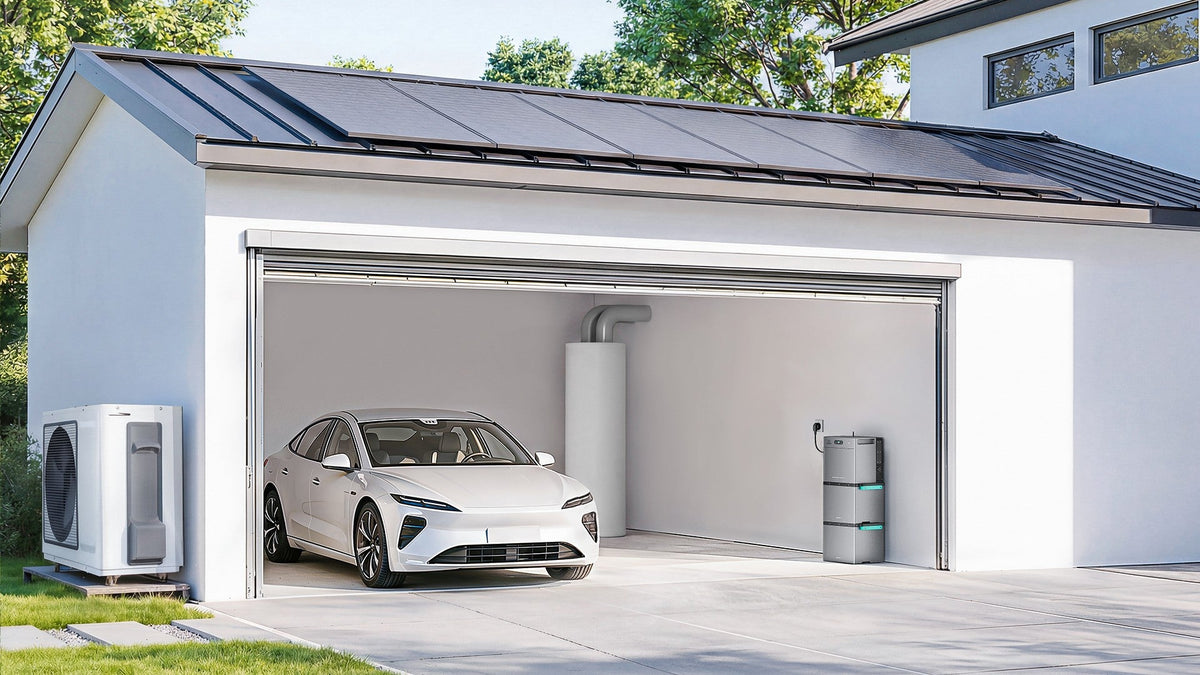
For a safe home battery, the fire department recommends a spot outside the escape route, a connection that doesn't overload the circuit and regular inspection. The recommendations apply to plug-in batteries and fixed systems, with the difference that an installer handles the connection for a fixed system. These are the most important points:
- Spot: not in an escape route or under the stairs, but in a dry, well-ventilated space that is accessible to the fire department.
- Surface: on or against a non-combustible surface, with free space around it and not near the heating or in direct sunlight.
- Smoke detector: a working smoke detector, optionally supplemented with a CO detector, in the room where the battery stands or hangs.
- Socket: a plug-in battery straight into a grounded socket, without an extension cord or power strip.
- Circuit: preferably a separate circuit and never more than one home battery per circuit.
- Meter cupboard: a marking indicating that a home battery is connected, including the supplier's emergency number.
- Inspection: check the plug, cables and housing twice a year, for example when the clocks change.
- Insurance: a notification to your insurer, since the terms of a home battery insurance vary from one policy to another.
Which space in your home is most suitable depends on the layout; you can read more about that in the article on where to place a home battery. If you don't want to connect an Anker SOLIX Solarbank with a standard plug, you'll find a fixed AC connection and a lockable Wieland socket among the accessories for your home battery.
Which signs point to an unsafe home battery?
Signs that point to an unsafe home battery include a chemical or burning smell, discoloration of the housing, and a battery that feels noticeably warm. Error messages in the app that keep coming back, or a battery that keeps switching itself off, can also point to a problem with the temperature or the cell balance.
Also keep an eye out for damage you can't see right away. After a knock, a fall, a leak or drilling nearby, a battery can be damaged internally. In that case, contact the supplier and don't try to open the battery yourself.
What should you do if your home battery catches fire?
If your home battery catches fire, leave the room immediately, close the door behind you if it's safe to do so, and call 112. Tell the emergency dispatcher that a home battery is involved in the fire, so the fire brigade knows what to expect. Do the same if there's smoke without visible flames.
After that, don't go back to switch off the battery. Switching it off in the meter cupboard is no guarantee that a home battery is de-energized, so the risk of an electric shock may still remain. Only contact the supplier or installer once the fire brigade has declared the situation safe.
Can you put out a home battery fire with a fire extinguisher?
No, you can't effectively put out a home battery fire with a fire extinguisher, and we advise against trying to extinguish it yourself. At most, an extinguisher can limit the flames on the outside, while the reaction inside the sealed cells simply continues. On top of that, you'd be standing right next to the source of the smoke.
In any case, never try to put out the fire yourself with water. Water can trigger a violent reaction in a burning lithium battery, and according to the Dutch Burns Foundation, trying to extinguish battery fires yourself with water leads to life-threatening situations. Leave the extinguishing to the fire brigade, who are equipped for it.
Get started safely with a home battery from TechPunt
Looking to buy a home battery? TechPunt is happy to help you find a model that suits your home and meter cupboard. We carry home batteries from Zendure and Anker SOLIX and ship them from our own warehouse in Barneveld. Not sure about the connection or the capacity? Ask our customer service by phone, email or WhatsApp.


